Getting Started with AI Translation: A Complete Guide
The Future of Communication is Here
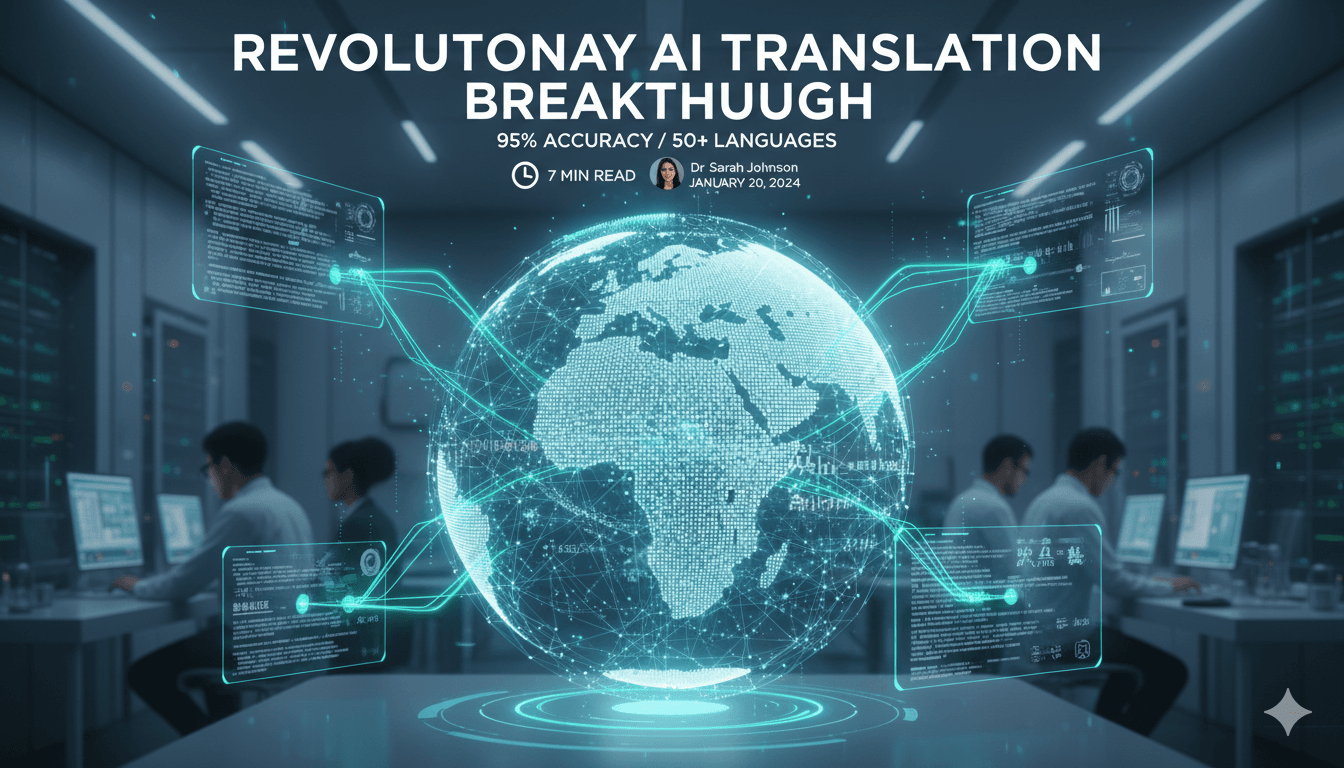
Artificial Intelligence has revolutionized countless industries, and translation is no exception. Today's AI translation tools can process text with remarkable accuracy, understanding context, nuance, and cultural subtleties that were once the exclusive domain of human translators.
Why AI Translation Matters
In our increasingly connected world, language barriers remain one of the biggest obstacles to global communication. Traditional translation methods are:
- Time-consuming: Manual translation can take hours or days
- Expensive: Professional translators charge premium rates
- Inconsistent: Different translators may produce varying results
- Limited: Not all language pairs are readily available
AI translation addresses these challenges by providing:
- Speed: Instant translation capabilities
- Cost-effectiveness: Dramatically reduced translation costs
- Consistency: Uniform quality across all translations
- Scalability: Handle large volumes of content efficiently
Key Features of Modern AI Translation
Contextual Understanding
Modern AI systems don't just translate word-for-word. They understand:
- Context: The meaning behind words in specific situations
- Tone: Formal vs. informal language requirements
- Cultural nuances: Local customs and expressions
- Industry terminology: Specialized vocabulary for different fields
Multi-format Support
Today's AI translation tools can handle:
- Documents: PDFs, Word files, and other text formats
- Websites: Real-time website translation
- Audio: Speech-to-text translation
- Images: OCR and translation of text in images
Best Practices for AI Translation
1. Choose the Right Tool
Not all AI translation tools are created equal. Consider:
- Accuracy: Look for tools with high accuracy ratings
- Language support: Ensure your target languages are supported
- Integration: Check if it integrates with your existing workflow
- Security: Verify data protection and privacy measures
2. Prepare Your Content
To get the best results:
- Clean formatting: Remove unnecessary formatting
- Clear context: Provide context when possible
- Consistent terminology: Use consistent terms throughout
- Review source text: Ensure the original text is clear and well-written
3. Post-translation Review
Always review AI translations:
- Check accuracy: Verify technical terms and proper nouns
- Cultural appropriateness: Ensure cultural sensitivity
- Tone consistency: Maintain the intended tone
- Grammar and style: Polish the final output
Common Use Cases
Business Communication
- Email correspondence: Quick translation of business emails
- Documentation: Technical manuals and user guides
- Marketing materials: Brochures and promotional content
- Legal documents: Contracts and agreements (with human review)
Content Creation
- Blog posts: Multilingual content for global audiences
- Social media: Real-time social media translation
- E-commerce: Product descriptions and customer support
- Educational content: Learning materials in multiple languages
The Road Ahead
AI translation technology continues to evolve rapidly. We're seeing advances in:
- Real-time translation: Instant voice and text translation
- Specialized models: Industry-specific translation capabilities
- Quality improvement: Better understanding of context and nuance
- Integration: Seamless workflow integration
Conclusion
AI translation is not just a convenience—it's a necessity for modern businesses and individuals who want to communicate effectively across language barriers. By understanding the capabilities and limitations of current technology, you can leverage AI translation to expand your reach and improve your global communication.
The key is to use AI as a powerful tool in your translation workflow, combining its speed and efficiency with human oversight and cultural understanding. With the right approach, AI translation can help you break down language barriers and connect with audiences worldwide.
Ready to get started? Explore our AI translation tools and see how they can transform your communication strategy.